
Why Brazilian Footballers Can No Longer Win the Ballon d’Or
97 Repoter: 97 Admin
Publish : 2 hours agoUpdate: 1 second ago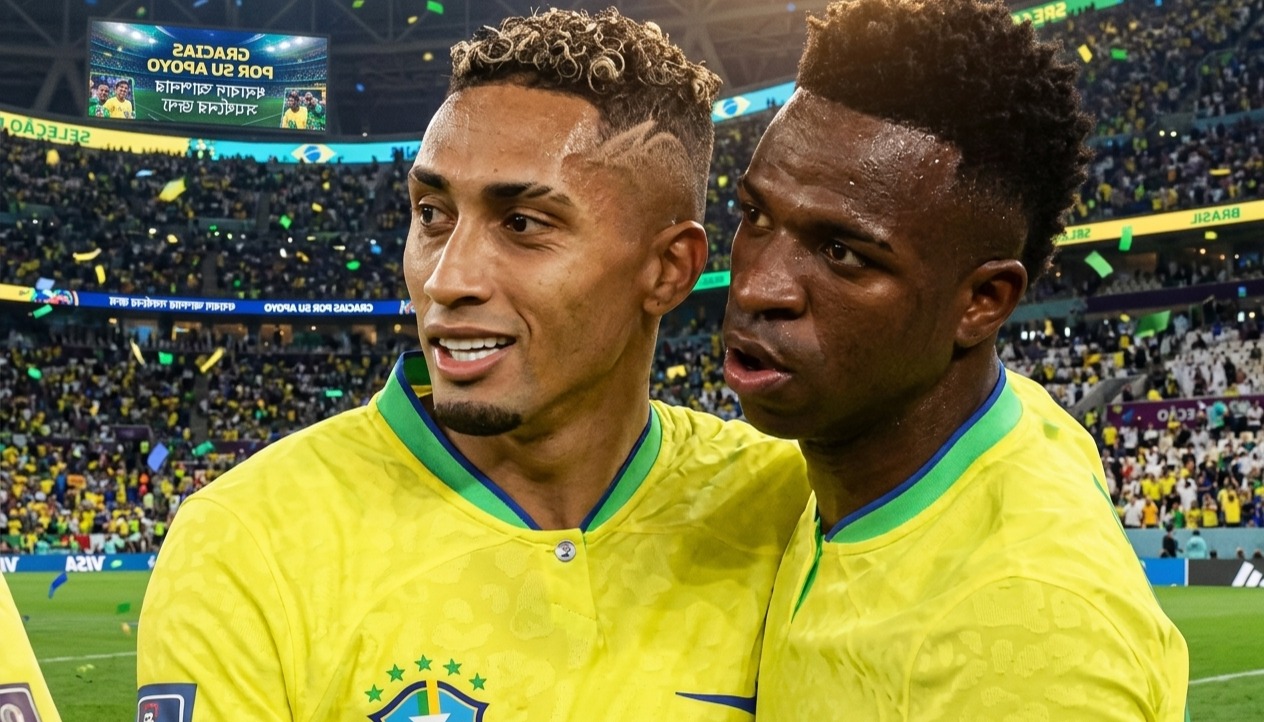
Why Brazilian Footballers Can No Longer Win the Ballon d’Or
Why Brazilian Footballers Can No Longer Win the Ballon d’Or
There was a time when seeing a Brazilian footballer on the Ballon d’Or podium was almost routine. Ronaldo, Rivaldo, Ronaldinho and Kaká repeatedly carried Brazil’s name to the top of world football.
Today, that feels like a distant memory.
In the 2026 Ballon d’Or, Vinicius Junior was Brazil’s highest-ranked player in 17th place. Arsenal defender Gabriel Magalhães finished 21st, while Paris Saint-Germain defender Marquinhos was 25th. No Brazilian male player made the top 10.
So the question is bigger than Brazil’s disappointing 2026 result:
Why has the country that once produced some of the most naturally gifted footballers in history struggled to produce a regular Ballon d’Or contender?
Kaká Was the Last Brazilian Winner
The last Brazilian to win the men’s Ballon d’Or was Kaká in 2007, when the AC Milan playmaker enjoyed one of the greatest seasons of his career.
Since then, almost two decades have passed without another Brazilian lifting the award.
Brazil’s official male Ballon d’Or winners are Ronaldo, who won in 1997 and 2002, Rivaldo in 1999, Ronaldinho in 2005 and Kaká in 2007.
The 2026 edition also underlined Brazil’s decline. It was the country’s worst Ballon d’Or performance since 2010, when Maicon finished 17th—the same position occupied by Vinicius this year.
The Golden Generation
After the Ballon d’Or rules were expanded in 1995 to include players from any nationality playing for European clubs, Brazilian stars quickly became major contenders.
Between 1997 and 2007, Brazil produced four winners: Ronaldo twice, Rivaldo, Ronaldinho and Kaká.
Brazilian players were also regularly present near the top of the rankings. Between 1996 and 2007, Brazil had a player in the top three in almost every edition.
It seemed as though one Brazilian superstar was always ready to replace another.
Then Came the Messi-Ronaldo Era
Lionel Messi and Cristiano Ronaldo also played a major role in changing the Ballon d’Or landscape.
Between 2008 and 2017, the pair won the award eight times. Their extraordinary consistency and dominance made it extremely difficult for other players to break through.
Luka Modrić finally interrupted that dominance in 2018, followed by Lionel Messi, Karim Benzema, Rodri, Ousmane Dembélé and Harry Kane in subsequent editions.
But Brazil’s decline cannot simply be blamed on Messi and Ronaldo. The country’s own talent-development problems have become increasingly difficult to ignore.
Neymar Was Brazil’s Biggest Hope
After Kaká, Neymar became Brazil’s biggest Ballon d’Or hope.
He finished third in both 2015 and 2017, behind Messi and Ronaldo. His natural ability was rarely questioned.
But talent alone does not guarantee the Ballon d’Or.
Injuries, inconsistency and an inability to maintain his best level throughout entire seasons prevented Neymar from taking the final step toward the prize.
Brazil was left waiting for another genuine winner.
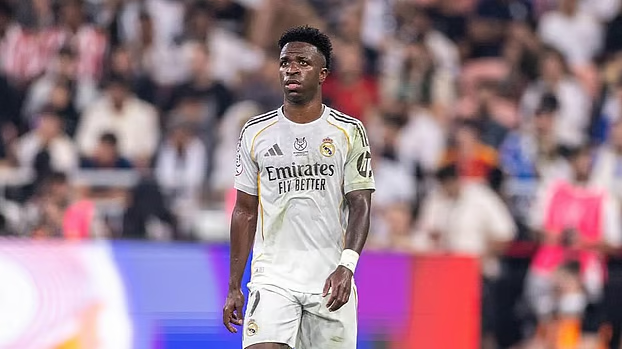
Vinicius Failed to Build on His 2024 Podium Finish
Vinicius Junior appeared to be the player most likely to end Brazil’s long wait.
He finished second in 2024 and was widely considered one of the leading candidates to eventually win the award.
Instead, his ranking dropped to 16th in 2025 and 17th in 2026.
This year, Brazil had three players in the final top 30: Vinicius in 17th, Gabriel Magalhães in 21st and Marquinhos in 25th.
Vinicius’ 2024 podium finish therefore looks less like the beginning of a new Brazilian era and more like an isolated peak.
Is Brazil’s Talent Pipeline the Problem?
One of the biggest explanations lies in the development of young players.
Brazil’s football culture was historically built around street football, futsal, beaches and small-sided games. Young players had the freedom to experiment, dribble, improvise and make their own decisions.
That environment helped produce generations of creative footballers.
But modern youth football is becoming increasingly structured. Academy systems emphasize tactics, physical development, positional discipline and results from a very young age.
That structure can produce more organized players, but there is also a risk that it reduces the freedom and improvisation that once made Brazilian football unique.
Has Street Football Lost Its Influence?
The traditional Brazilian street-football environment was one of the country’s greatest competitive advantages.
On streets, beaches and open pitches, children played without constant tactical instructions. There were no complicated systems to follow. There was simply a ball, imagination and the freedom to challenge opponents.
Romário has argued that this kind of environment played a major role in developing the creativity of young Brazilian players.
As organized football becomes more dominant, that natural freedom is increasingly difficult to preserve.
The Problem Is Bigger Than Creativity
Brazil’s problem is not simply that it produces fewer “magicians”.
Modern football demands much more from elite players. Speed, strength, pressing, tactical intelligence, defensive contribution and consistency have become increasingly important.
A forward is no longer judged simply by goals and dribbles. Midfielders and full-backs are expected to influence games in multiple phases.
Brazil continues to produce talented players. Raphinha and Estevão are among the newer names attracting attention, while Vinicius remains a world-class player.
But the country has not yet developed the depth required to consistently produce several Ballon d’Or-level players at the same time.
Too Much Dependence on One Superstar
Another issue is Brazil’s reliance on individual stars.
After Kaká, the country’s hopes increasingly revolved first around Neymar and then Vinicius.
When one player struggles, the entire narrative around Brazil’s chances of producing a Ballon d’Or winner suffers.
That is very different from countries such as France, Spain, England and Argentina, which have been able to produce several elite players within the same generation.
The Numbers Tell the Story
Brazil has won the men’s Ballon d’Or five times through four players: Ronaldo twice, Rivaldo, Ronaldinho and Kaká once each.
Argentina and France have eight wins each, while Portugal, Germany and the Netherlands have seven apiece.
There is, however, an important historical caveat: before 1995, players from outside Europe were not eligible for the award. That means the raw number of wins does not completely reflect Brazil’s influence on world football.
Is Brazil’s Golden Era Over?
Not necessarily.
Brazil remains one of the world’s biggest exporters of football talent, and Brazilian players continue to feature heavily at Europe’s biggest clubs.
The next generation is also beginning to emerge. Raphinha, Estevão and others could yet develop into global stars.
But winning the Ballon d’Or requires more than extraordinary talent. Players need sustained elite-level performances, major club success, influence in the Champions League or international competitions and consistency throughout an entire season.
Kaká was the last Brazilian to reach that level in 2007.
Nineteen years later, Brazil is still waiting.
Vinicius’ second-place finish in 2024 offered a glimpse of hope, but his 17th-place finish in 2026 highlighted the deeper issue.
Brazil’s problem is not simply the absence of another Ballon d’Or winner. The bigger challenge is rebuilding a development system capable of producing several world-class players consistently enough for one of them to eventually become the best player in the world.
The next Brazilian superstar may already be growing up somewhere with a ball at his feet. But finding him is only the beginning—the real challenge will be creating the environment that allows his talent to reach the very top.